Outbound Isn’t Dead. You Just Need to Stop Automating Connection. 

Our Inboxes Need a Reality Check

Every Tuesday, I get over 100 cold emails, and most of them are awful. They’re impersonal, pushy, and sometimes flat-out rude. It’s no wonder outbound gets a bad rap. These messages come from SDRs who are desperately trying to reach their quota. 

The one troubling, yet consistent theme I’ve noticed amidst a sea of ineffective outbound messages is that they immediately open with a demand and there is a reason those types of messages doesn’t land well—I as well as all outbound message recipients— do not owe my time to a complete stranger. When follow-up messages become forceful in demanding a response, it makes me less apt to work with that company in the future.

But here’s the truth: outbound works, just not the way you think. 

Why Most Outbound Fails Before It Starts

The biggest mistake I see companies make in leveraging their outbound team is treating them as if they are another email automation or one-to-many channel. Clever and creative emails sent at scale are what email automation platforms were built for; this model simply does not work with outbound.  

The most impactful and beautiful thing about your business/sales development representatives is that they are a team of humans, capable of human connection, empathy, and tailored messages. This is the secret sauce, and this is what makes an outbound strategy effective. 

Throw your Freezer-Burned Cold Calling and Emailing Strategies in the Trash

SDRs are not effective at the top of the funnel. Full stop. They need data to thrive, and that is why they belong on the marketing team, where data drives decisions. 

Contacting a complete stranger out of the blue with your value proposition is a waste of time. An outbound message only works when it reaches someone who actually gives a shit about what you have to offer. This means prioritizing quality over quantity. The best outbound messages hit the right person about the right solution at the right time. This can only be achieved by using data to select the right prospects, including:

  • Closed/Lost opportunity Data 
  • Intent data from ABM tools 
  • Past marketing campaign interactions
  • Professional relationships (old clients in new roles, friends of executives)

What Winning Outbound Teams Do Differently

Lead Recovery > Cold Prospecting

In a B2B environment, timing is everything, so even if you have a viable lead, factors such as org chart changes and budget cuts can make these opportunities run cold. 

Account executives will always focus their attention on the most viable opportunities in any given pay period so that they can make their commission. Even the most well-intentioned Sales Executive is going to deprioritize follow-up with a stagnant opportunity over closing a hot deal; their compensation packages actually incentivize this behavior.

This leaves room for your BDR team to follow up and recover opportunities when a lead becomes non-responsive or an opportunity is closed-lost due to budget or prioritization issues. BDRs can jump in and give your sales team another “at bat” with an otherwise dead lead. 

Share Something Useful First

Instead of reaching out and requesting a meeting in the first interaction, arm your BDRs with an arsenal of educational material from the marketing team, so they can lead with value, rather than asking for something from a perfect stranger. This only works when the content shared is relevant, so you must leverage data to ensure they are sending content that will resonate.

This looks like following up with a person who downloaded a piece of content with a related asset rather than demanding a phone call, or following up with a lead who ghosted with a case study to provide more information. Having a BDR reach out with a piece of education material to a hot lead does two things, first it leads with value rather than demanding something from a cold lead, and we start with an offer. Second, it helps increase the chances that your high-value marketing materials are actually seen by the most attractive leads (and gives you a cookie to fuel retargeting efforts). 

The average person receives 120 marketing emails a day. So even the most clever marketing emails are less likely to be seen by your prospects now than they were even five years ago. BDRs can help ensure your most effective content is seen by the right people.   

Make Events Irresistible 

I’ve found success in filling customer events with a healthy mix of prospects and sales contacts. The secret here is to make the event irresistible, be it an exclusive sporting event or a Michelin-star dinner, so the prospect feels like it’s worth their time. While you can expect more attrition from your RSVP list from prospects compared to customers, aligning prospects with your most engaged customers is a winning recipe so the juice is certainly worth the squeeze.  

An exciting event invitation is a great way to lead with value, the more personalized the invitations, the more successful you’ll be in filling these events.

Bonus: Even if your prospect isn’t able to attend, an incredible event invitation is still a great way to start earning trust with these prospects. 

Related Content: Discover the secret to my $25M Event Strategy

How to build Your Own Outbound Machine

Better Pipeline Starts with The Best People

The best, most successful BDRs have an extremely high emotional intelligence. These are empathetic people who enjoy connecting with others. After all, modern outbound is not a numbers game; you need someone who understands how to pick a viable connection, find common ground with strangers, and be persistent. 

Ditch your Email and Phone Call Quotas 

If you want to incentivize your team to craft truly tailored and effective outbound messages, you need to incentivize them accordingly. This means rethinking the traditional quota-based requirements and payment structures. 

Invite Them to Marketing Planning Sessions and Include Them in Your Feedback Loops 

BDRs actually interact with customers and prospects, so they are an incredible source of feedback when it comes to what content and campaigns resonate with customers. Exposing them to campaign planning also serves as inspiration to help them devise smarter outbound campaigns. 

Here’s the Proof

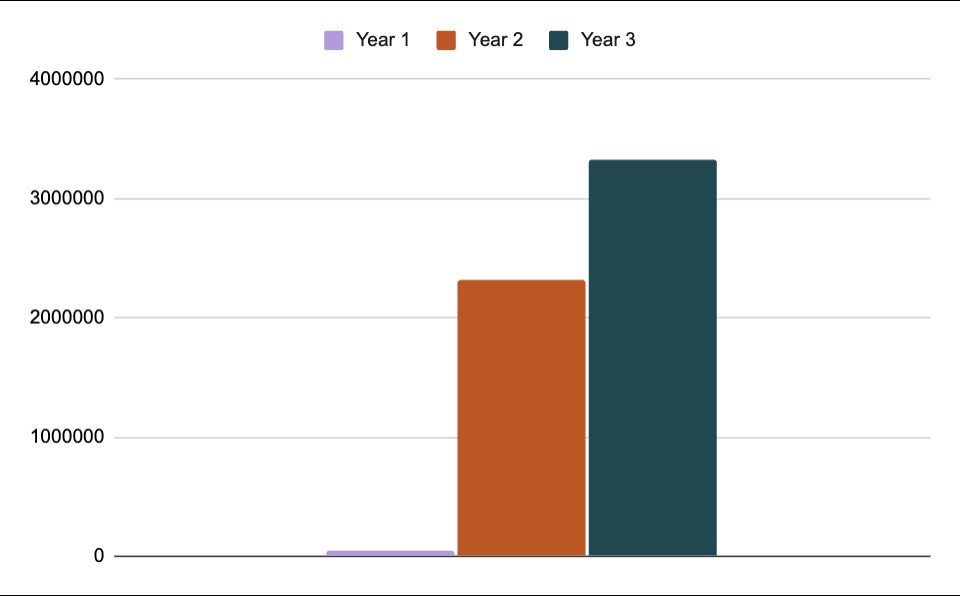
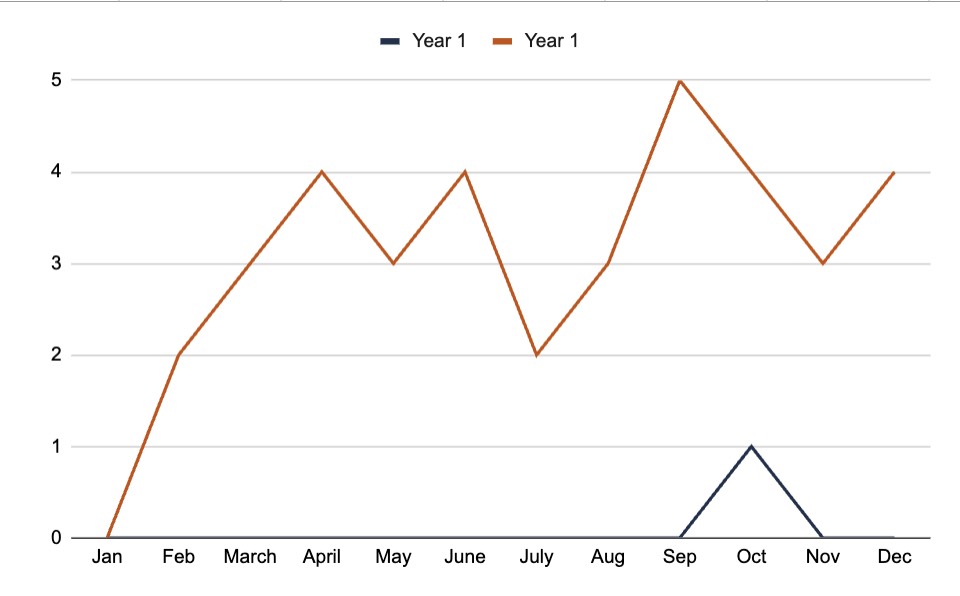
I transformed an outbound program that brought in only one opportunity in a calendar year to a high-performing team that brought in nearly 3 million in pipeline in one year. Same team, with a better strategy and access to data to make their outbound strategies stronger.

Revenue increased from just 18k in Pipeline in 2023 to over $3M in pipeline generated YTD.

Outbound Sourced Pipeline 2023-25

Outbound Sourced Opportunities 2023-25

TL;DR

Outbound works, but only when it connects, and connection requires more than clever copy and a cadence sequence. It takes empathy. Timing. A real understanding of who is on the other end of the message and what they’re navigating in their business. Most outbound programs fail not because people don’t want to talk, but because the message you’re sending them gives them no reason to care. 

If you want outbound to work for you, then we have to reframe what it looks like:

  • One well-timed, human message will always outperform 1,000 generic ones.
  • Follow the breadcrumbs (closed-lost opportunities, intent signals, content downloads)
  • Give something before you take. Share something useful. 
  • You need a viable connection. Make sure your BDRs are the right people for the job. 

When we give our teams the data, space, and permission to act like people (not programs), we create something powerful: trust, not just a pipeline. 
ABM Done Right: How We Stole $1.7M In Pipeline From the Competition

In B2B marketing, reaching the right buyer is complicated, especially when you’re after a niche buyer for a specific service. ABM only works when your data is on point and your lists are relevant— sourcing this kind of list for our audience at Praecipio was always a bit of a struggle until we decided to think outside of the box. 

The Strategy 

Data–Like Inspiration– Can Be Found in Unexpected Places 

Turns out the perfect list was already available, we just needed to know where to look. We found it on our competitors websites in the form of case studies and published logos. 

We scoured six competitor websites and compiled a list of 199 pre-qualified accounts.


Don’t Be Afraid to Be a Little Sassy 

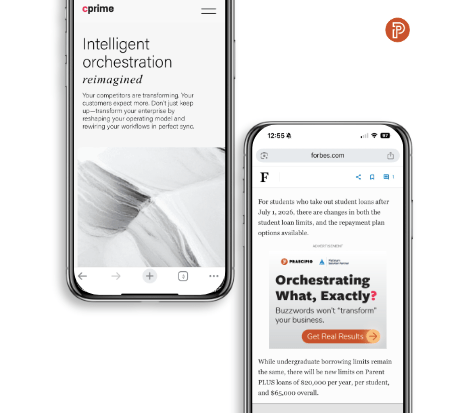
Our ABM Platform, Rollworks, works on a Display Network, so we needed some glorious creative to get attention from our buyer. Just like with the list, we went back to the very same websites for inspiration, or as my brand teammate put it, “Let’s build ads that make fun of the competition’s branding!” 

Each ad concept leveraged our competitors’ branding, taglines, and colors. Nothing was off the table and some of the ads were pretty sassy with much of the  design taking aim at our rival marketing teams more than anything. We walked the fine line to ensure the ad content was identifiable enough to catch a client’s eye, without going too far into genuine intellectual property theft. 


Campaign Details 

We deployed the campaign with a modest budget of just $10k for the whole quarter and narrowed our targeting to specific job titles.

With a Salesforce/Rollwork integration, tracking ROI was easy. 

Results 
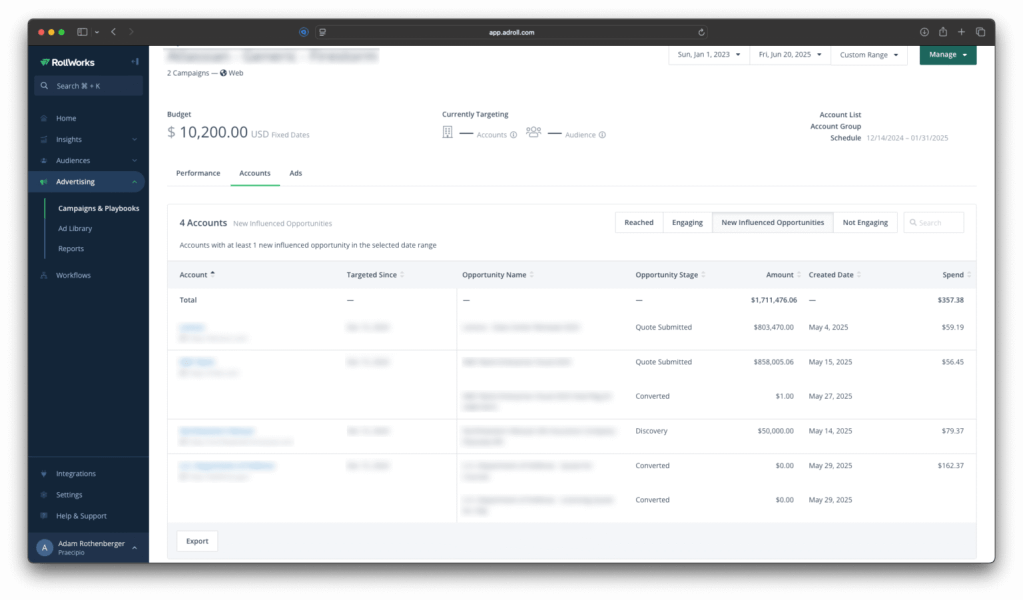
  • $1.7M in pipeline in just 3 months 
  • 3 new opportunities 
  • Incredible gossip and conversations for our BDR team

A 25 Million Dollar Customer Event Strategy

You can’t put a price tag on face-to-face connections, but if you backed me in to a corner, I would say they’re worth $25M.

The Problem


Since 2020 remote work has been on the rise, this makes it so much harder in a services-based business to connect in person with your full buyer’s committee. Flying to a company HQ just doesn’t have the same effect as it did six years ago, as many of the stakeholders are likely scattered around the country. Despite this, we know nothing can replace the impact of a face-to-face conversation when it comes to solving complex business problems.

So we had to rethink the way we connected with customers to fit our new ways of working.


Our winning Formula:

  1. Make it Regional

We host multiple events across your territories and invite a mixture of prospects and customers. (Expect a higher attrition from prospects, but invite them anyway).

Related: How I Leveraged My Outbound Team to Fill Events

2. Make it Fabulous

Our winning formula was an exclusive Executive Workshop hosted by our seasoned field CTOs followed by something so premium they are willing to invest an entire afternoon with us.

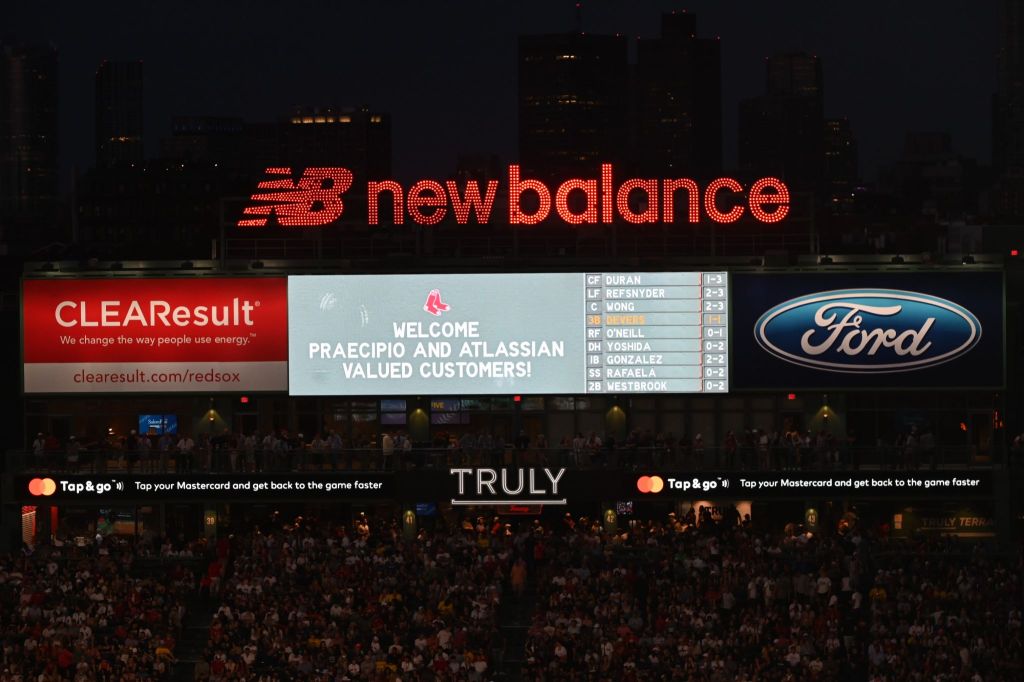
  • Premium Sporting events – Think private box at Fenway’s exclusive Green Monster or exclusive access to the Waste Management Phoenix Open.
  • Michelin-Star or other gourmet culinary experience.

The Results

  • $25M in pipeline
  • Movement on deals that had been stagnant for over 24 months


Our SEO + Website Overhaul that Lead to an 80% Increase in Website Traffic

Content, Structure, and GTM Updates

Our website relaunch and SEO overhaul (launched May 30) delivered measurable business value ahead of schedule!  With no major ad spend and a lean internal team.

Key Outcomes:

  • Sustained traffic surge began in April due to pre-launch metadata and content upgrades
  • No paid promotion behind 90% of top-performing blogs and solution pages
  • Content is driving conversion: avg. time on page exceeds 2 mins, with organic entrances up significantly quarter over quarter

Why It Matters:

  • The website is now a proven lead engine, contributing to top-of-funnel growth without additional spend
  • We’ve reduced reliance on paid channels—positioning Marketing for greater efficiency and long-term scalability
  • Performance validates our GTM messaging and content strategy, especially around VISTA solutions

How We Got Here:

  • Strategic investment in high-intent keyword targeting and metadata restructuring (Q1)
  • Content rewrites + UX improvements boosted dwell time, reduced bounce
  • A/B testing + schema optimization positioned our pages for maximum visibility and click-through
  • 25+ new VISTA-aligned solution pages and 500+ optimized legacy content assets
  • 70k+ backlinks and 3.6k+ referring domains with minimal paid promotion

What’s Next:

  • Continue expanding editorial content and backlink authority to compete at the enterprise level
  • Leverage insights to further improve gated conversion and demo generation
  • Maintain quarterly SEO and UX audit cadence to stay ahead of algorithm and market shifts

 Record-Breaking Organic Day


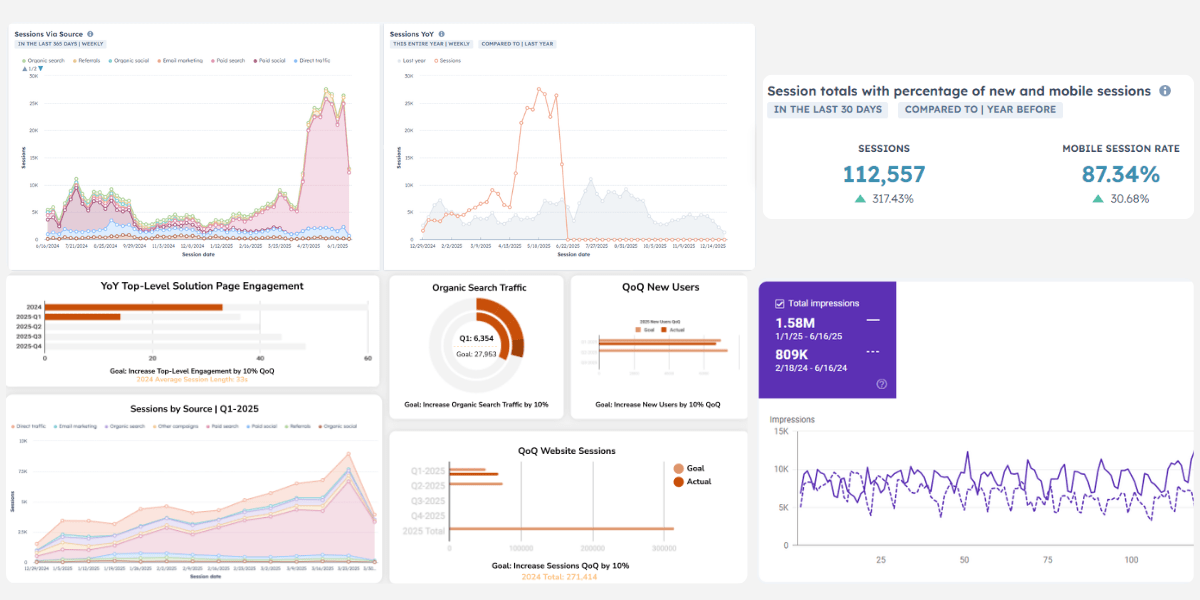
On Friday, June 13, we broke our all-time daily click record in Google Search with 6,134 organic clicks in a single day! This is a direct result of the strategic SEO, content, and metadata work we executed in Q1 and Q2!

Results

  • +80% lift in monthly traffic (from ~100K to 180K+)
  • 6,134 organic clicks in a single day (record high, no paid spend)
  • Mobile sessions up 30% thanks to Core Web Vitals + UX improvements
  • Bounce rate dropped, engagement time increased, and
  • 90% of top-performing content drove traffic without paid promotion
  • Targeted keywords ranked across Atlassian, consulting, and long-tail intent
  • Content structure directly supported SEO, visibility, and conversion paths

Rethinking Gated Content

How I Created a Better Customer Experience and Attracted Better Leads

In Q2 of 2024 we noticed a substantial dip in form fills. This decrease in leads was a cause for concern when it came to meeting our ambitious revenue goals for the year. After a deep dive, I realized this was not unique to our organization, but instead a global trend

The way that we’ve been doing our B2B Marketing for the last 15 years isn’t working as well as it used to. By the Traditional playbook, I’m referring to using gated content to capture leads until they’re “sales-ready”, scoring them and passing them almost like a baton to an SDR to qualify. The SDR then qualifies the lead and passes the baton to Sales” Jon Miller, Martech Entrepreneur

Why was this happening? 

  • People are bombarded with marketing messages. And they are over it – popular marketing and sales tools have led to an overwhelming amount of unwanted emails and phone calls.
    • In 2024 the average person receives 120 emails – compared to just 20 in 2014. 
  • Buyers are now hesitant to download an ebook and fill out a form because they know they’ll get an unsolicited phone call and emails as a result. More buyers are turning to digital, self-guided research and are trying to do so anonymously. Then reaching out on their own timeline.
  • People expect a tailored experience especially if they’ve filled out a form on our website before. 

The Solution: Death to PDFs 

As with all performance marketing leaders, I was faced with the conundrum: I wanted to reach a wider audience, but I still had to show proof of marketing’s impact to our board of directors and business partners. So we doubled down on these priorities:

  • Focus on high quality thought leadership and make it easy to find.
    • Content still matters – On average, people consume 12 pieces of content before they are ready to buy. 
  • Improve the customer experience on high-value content – This meant that the old PDF style gated asset had to go. 

3 Reasons Why PDFs are Awful 

  1. Terrible version control when someone downloads an asset (ahem. especially your sales team members). 
  2. They a harder for Search engines to crawl. 
  3. They are ugly and hard to read, especially on mobile. 


The New Premium Asset Experience  

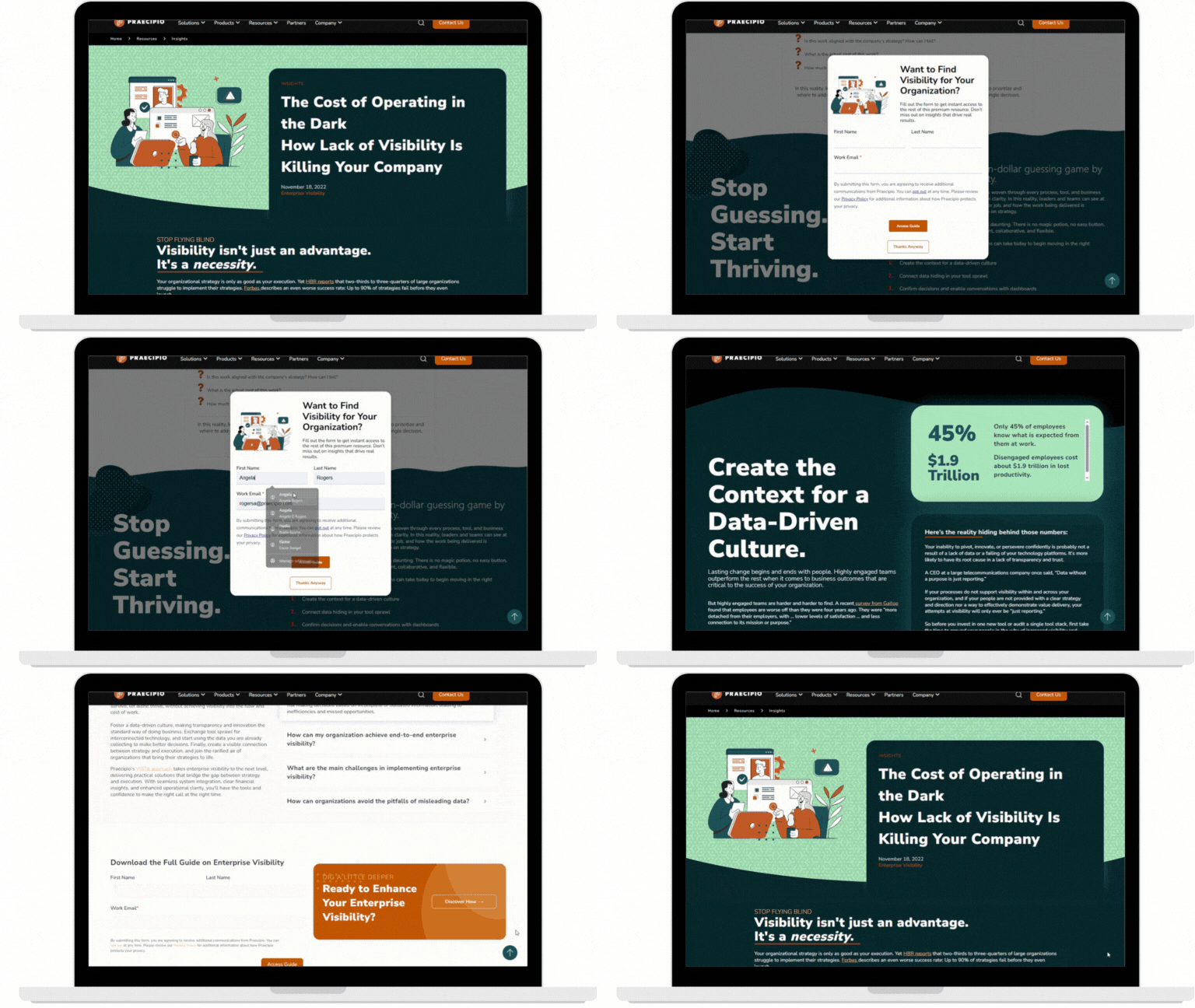
We built beautiful landing pages to house our premium content and killed the PDFs once and for all! The asset-gate had to live on for reporting purposes, though, in a newer format as pop-up CTA strategically placed to appear in the moment our content gets good. 

Bonus: This new format was crawlable for AI and search engines, meaning our valuable content can actually bring in organic traffic. It’s also way easier to read on all devices. 

Friends With Benefits (Returning Visitors)

If you’ve completed a form on Praecipio.com and can’t get enough of our stuff, cool. We’re not going to harass you with MORE forms for all our gated content. 

Thanks to cookies, once a user’s visited our website and been cookied, our CTAs will quietly associate and record the assets they checked out after that. Hubspot will grant them uninterrupted access to future assets without asking for another form fill. (Obviously this didn’t work with cookie blocking software but it was progress.)

Results 

  • Since the change, we noticed a substantial increase in website traffic, especially from mobile.
    • Mobile Session rate increase 30% 
  • Our sessions via organic search volume increase by 20% to key assets.
  • We met our Revenue goals and saw a spike in opportunities related to the assets that utilized this new format. 

Brand Campaign: Calling Bullshit on Transformation

How We Stood Out Amidst a Sea of Same

Praecipio is in a highly competitive market with more than 100 competitors in the Atlassian Solution Partner space, all of which have similar solution and product offerings. In a saturated market, creating a unique point of view isn’t a nice to have, it’s imperative to your organizations success. 

When we attended an annual Atlassian conference alongside all of the competitive companies in North America, we knew we needed to stand out amidst the sea of same. This was a great opportunity to push some boundaries and be a little controversial. Here is how we did it. 

Step One: Scope out the Competition

After perusing on our main competitors websites and exploring photos from the previous year’s event, we found that nearly everyone’s website and booths followed the same tired formula: a wall of too much text, logo and specialization-badge soup, and a whole lot of iterations on the phrase “Digital Transformation.”

Step Two: Find a Compelling Story

Research and Data 

I’ve worked in tech for more nearly two decades and for the duration of my career, companies have been undergoing “digital transformation.” After a little research, I discovered the term “Digital Transformation” was coined back in 1948 and gained popularity in the 1980s with the dawn of the world wide web. 

If “transformations” worked, wouldn’t we be done by now?

As it turns out, I wasn’t the only one questioning our collective, decades-long quest to “transform”. Here’s what the data says… According to Bain & Company, 88% of business transformations fail to deliver the expected results. That means only 12% of companies see the return they hoped for. And it’s getting worse. Back in 2015, McKinsey reported a 70% failure rate. Fast-forward ten years, and that number hasn’t budged.

So I found our angle: transformation is bullshit, it’s time for something new. Praecipio’s strategy involves Incremental improvements not disruptive and expensive transformation so you can start to see improvement without sacrificing progress. 

Step Three: Have Your Creative Team Work Their Magic 

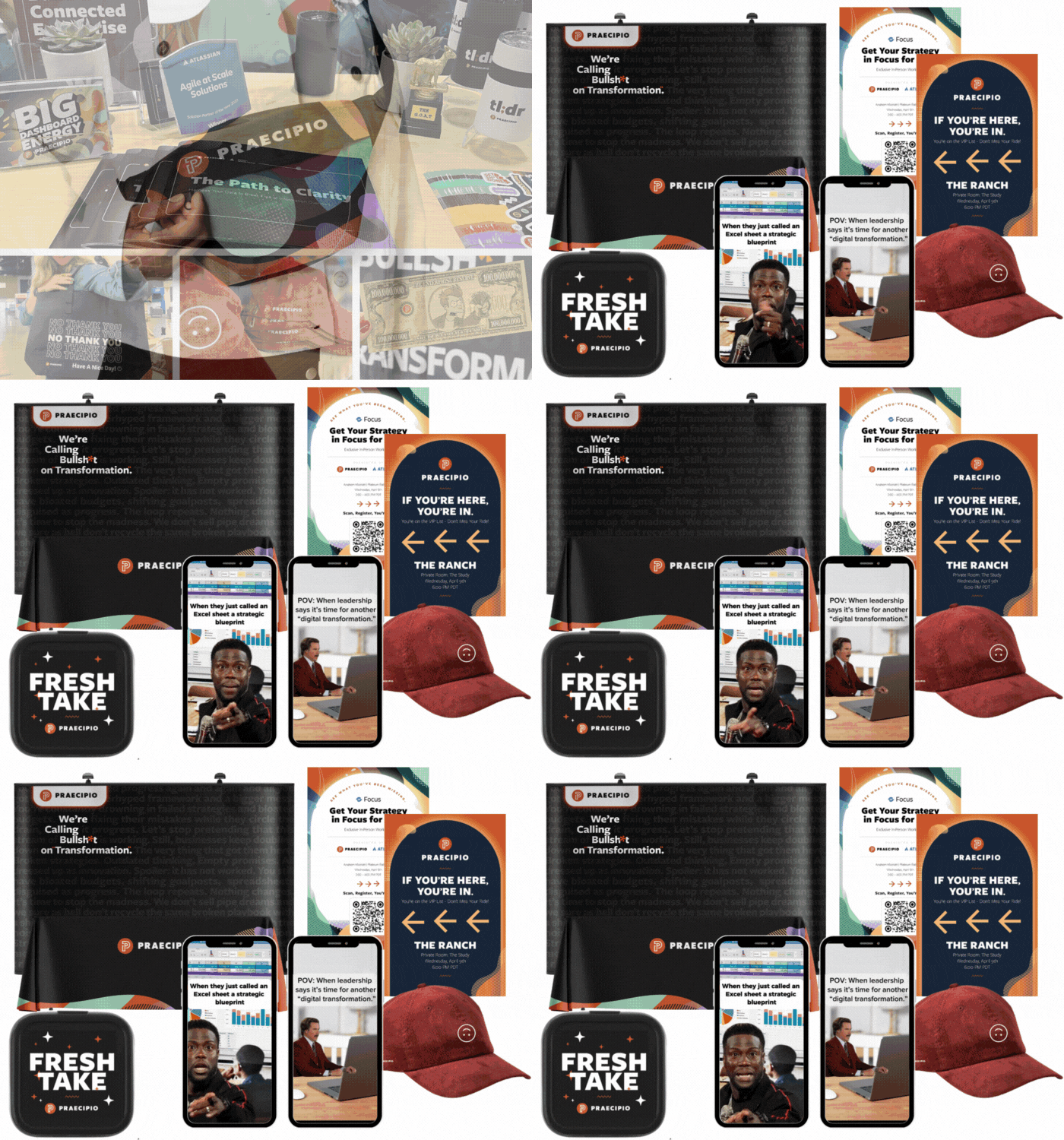
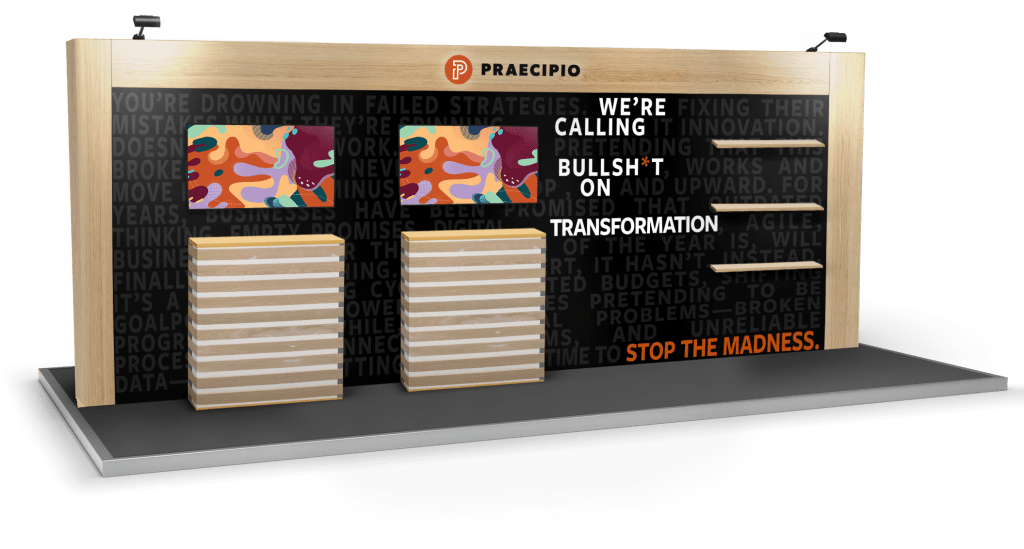
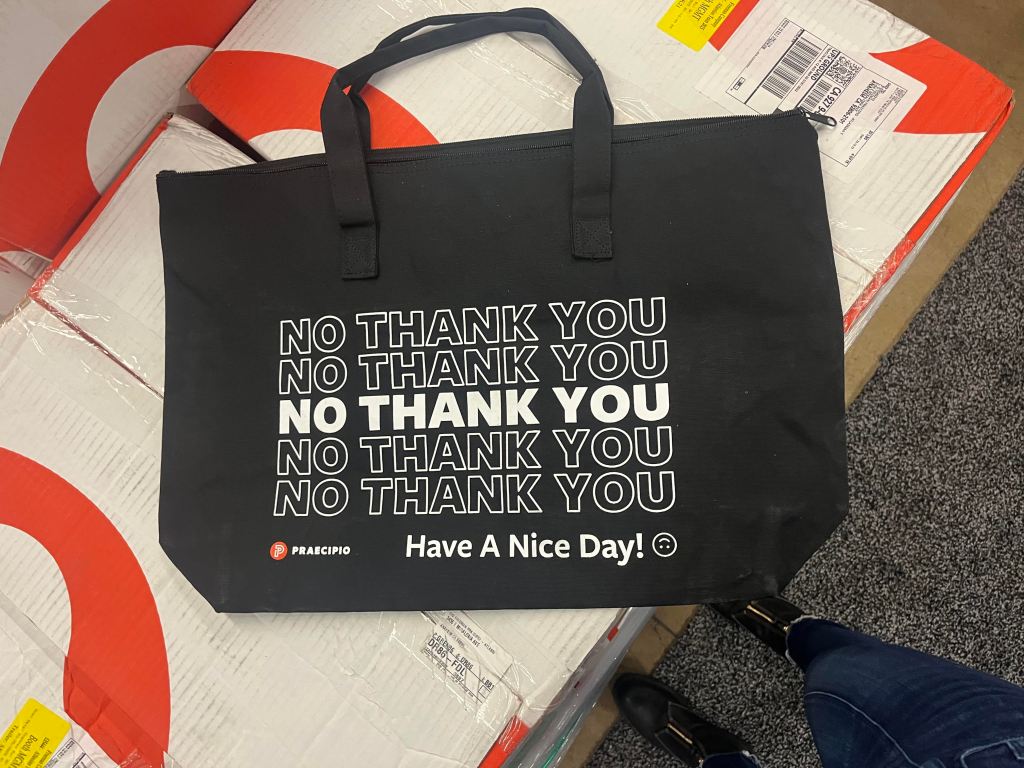
I developed the story alongside our brand team and they worked their magic to create a stunning onsite installation including a bold booth design, and swoon-worthy swag to support our bold point of view. 


Step Four: Build the Narrative and Prep Everyone

When you opt for a bold and controversial messaging, you need to prepare your team with the right language and reasoning behind your campaign– make them understand the “why” so they are confident standing in front of the booth when they talk to prospects. This looks like a booth talk track and a pre-event all hands meeting to get everyone on the same page.

Next we created supporting content like an article, social, and email campaign. 

The Results

First, it’s important to state that brand campaigns have a lasting impact and are not created for direct pipeline conversion. This play was to help us stand out and leave a lasting impression. Here is what we could measure from the campaign: 

  • The busiest booth in the exhibit hall: with countless compliments stating that we were the “coolest booth here.”
  • Swag that flew off the shelves: we ran out of hats on the first day. 
  • Leads: 4,500 leads and 215 hot leads (categorized by great conversations on the ground and BDR follow-up) 
  • Pipeline from the event: 12 new opportunities and 350k in pipeline from the event

Big Dashboard Energy: The Antidote to Marketing Burnout

Let Radical Data Visibility Set You Free 

This article was originally published on LinkedIn

Most of the marketers I know are on the verge of burnout. With constant regulatory and data privacy changes, shifting email deliverability requirements, and cookie depreciation, whatever strategy we were using six months ago to generate revenue, likely does not work anymore. If you’re not innovating, iterating, and adapting, you’ve already fallen behind

In times of economic turmoil, marketing departments are often the first to face cuts– almost half of marketing teams (46.5%) restructured in the last 12 months, according to Marketing Week’s 2024 Career & Salary Survey. That explains why 39% of marketers said they worried about layoffs in the recent LinkedIn survey.  

Marketing is a unique role. Much of our work is highly visible, which invites critique from nearly everyone in an organization. This leads to a lot of suggestions and unsolicited advice. For example, a developer may reach out and recommend you do a webinar with the people from their favorite app so they can get a discount, or an executive will recommend you start a company TikTok because his “nephew works in social media and says everyone is doing it.” Then a consultant will vehemently disagree with the name of your last webinar and call it unprofessional, and a program director will insist you share a QR code on your Instagram account (all these are real examples, not all from the same company). 

We may be seen, but we’re certainly not understood. Most C-suites and Board Rooms lack marketing experience. Only 2.6% of board members have marketing experience and 10% of Fortune 250 CEOs have any marketing experience. So we find ourselves constantly justifying our decisions to people who don’t understand our process or craft. 

So what happens when you combine rising pressure, chronic job insecurity, and a barrage of unsolicited feedback? Exhaustion and the temptation to acquiesce to higher-ups in your company despite your better judgment.

It’s hard to innovate when you feel obligated to say yes to everything. 

The Solution? Find Your Big Dashboard Energy

So how do you protect your team’s precious time, leave space for creative experimentation, and continuous improvement, and stop saying yes to projects that you don’t want to do and know won’t help the bottom line? You find yourself some Big Dashboard Energy and start showing up to conversations with receipts. 

The Power of Transparency 

Over the course of the last year, my team and I created dashboards that are visible to the entire organization. So anyone from the finance team to sales and delivery can see what we are doing, and dig into our wins and losses. This means airing our dirty laundry – sharing low-performing campaign data – with the very same people who behave as if they could do our job better than we can. But here is the thing: there is so much power in absolute transparency that when we started really digging into how decisions are made, the unsolicited feedback all but stopped. 

Use Data to Tell Your Stories and Gain Trust

Our dashboards gave us the ability to reframe our losses as lessons learned and create space to talk about what comes next. It also created a more open dialog with our sales team so we were able to get timely feedback on our targeting efforts and create a smoother handoff from sales to marketing, resulting in better close rates.

When you let the data do the talking, your peers can celebrate your wins with you while gaining an understanding of how your decisions are made when you pivot from your losses. 

This, like most things, comes down to communication. When you are talking with executives and others who don’t understand what it is that you do, you have to meet them where they are and speak a language they will understand – talk about the numbers. 


A Deeper Look Into Our Project

Background

My company, a B2B services organization, uses Salesforce on the sales side while the marketing team relies on Hubspot. Salesforce is our source of truth, meaning all reports for executive leadership and the Board come from Salesforce. 

Before this project, we used out-of-the-box integration between the two systems but struggled to address multi-touch attribution.

The Problem

Marketing ran a very successful multi-channel campaign that generated 60 new opportunities in just one quarter. Initially, attribution was working smoothly, then one day, the number of opportunities attributed to the campaign dropped from 60 to 40. We learned that the sales team was tasked with reaching out to their contacts to promote the new service area and using the campaign field to track their efforts. 

Since Salesforce only allows one opportunity to be attributed to one campaign, marketing attribution was overwritten by the sales team’s Cross-Sell-Upsell campaign. Sales and Marketing leadership agreed that both initiatives influenced these opportunities, but there was no way to report this without fixing our data foundation. 

The Solution

This project took almost a full year to complete and a ton of late nights to verify the data and address additional reporting needs, proper attribution, and integration issues. We worked with outside vendors and an internal FP&A and BI expert to generate the final dashboards and aggregate some of the data. 

Step One: Align with Sales

The first and most important step is to align with sales. Do not fall into the trap of sales vs. marketing, instead work together to define what is a marketing-originated opportunity and what constitutes marketing influence. Remember no deal exists in a vacuum and you both have the same goal in mind – grow the business– and to do that, collaboration is vital. 

Step Two: Define your Parameters   

Remember, you are reporting to executives who do not understand marketing, keep it simple so their eyes don’t glaze over. Executives just want to know that you are doing more of what is working, and changing what is not working. 

For us, this meant using an equal-weight attribution model. We wanted to know which marketing activities influenced purchases, we didn’t want to waste too much time trying to guess which action had the most influence

Step Three: Fix Your Data Foundation  

When your data is spread out into several disparate systems, pulling reports can take hours. To fix your data foundation, you need to leverage automated data collection, choose a single source of truth, and then make sure all the relevant data is in that system.

Our source of truth, Salesforce, did not have all the data we needed to paint the full picture of marketing impact, so we went beyond the basic HubSpot/Salesforce integration to map more marketing activities to Salesforce.

For us, this was email clicks, page views, form fills, and webinar registrations. We used Zapier and a Salesforce-specialized consulting company, ShadowRock , to build out our custom integration.  

Then we had to fix our biggest data issue – figure out how to attribute multiple campaigns to a single opportunity. Our solution for that was Align.ly , a Salesforce Marketing Attribution plugin. 

Step Four: Assess and Reassess Your Data to Ensure You’re Telling an Accurate Story

Throughout this process, we discovered three major pitfalls in our ability to accurately report on marketing impact. 

  1. We weren’t reflecting the full buying committee– In B2B marketing, you’ll find that the person doing the research isn’t always the one with the company card or signing power. Our biggest breakthrough was figuring out how to connect Contacts from HubSpot to Opportunities in Salesforce when they weren’t our main sales contact. 
  2. Our dashboarding software was over-attributing marketing influence–  We have a complex business model with multiple solutions and different target personas for each offering. Out-of-the-box attribution was tagging any marketing interaction to any and all opportunities in Salesforce. We needed to ensure that only relevant marketing campaign interactions were attributed to an opportunity. Our fix for this was matching campaign activity in Hubspot to service area fields in Salesforce – a complicated and somewhat manual process at first. That way we didn’t overstate marketing influence by attributing irrelevant content to a closed-won deal.
  3. Marketing wasn’t getting credit for the full scope and revenue generated from marketing-sourced opportunities– Many new customers start out with a low-cost assessment followed by additional service work and then licensing deals. In our old reporting model, we were only measuring the very first deal and not the two subsequent opportunities that stemmed from the same campaign. Our fix was to add second and third deals that happen within a certain time parameter to our reporting. 
Step Five: Build a Big, Beautiful Dashboard (or two)

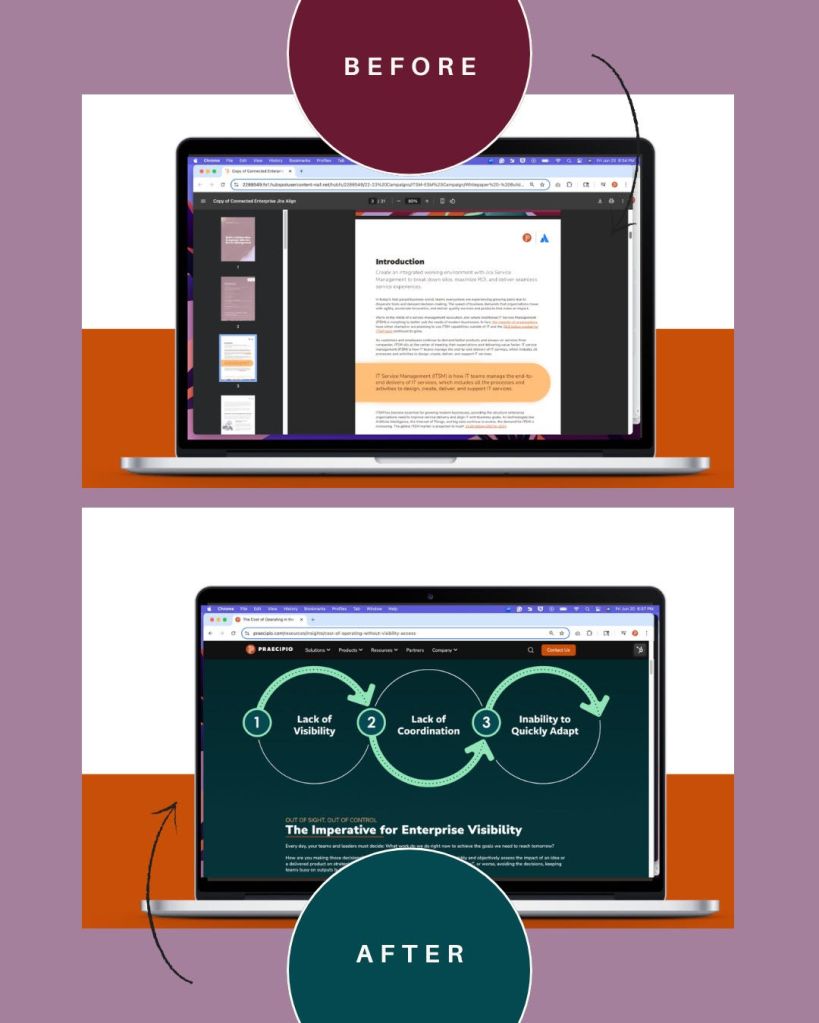
Executives and the Board don’t want to have to log in to Salesforce to track progress, so we built dashboards in PowerBI and generated automatic reports that are emailed at the end of each month. This also allowed us to customize the reports even further and ensure the graphs matched our brand. 


Big Dashboard Energy In Action 

By tapping into my Big Dashboard Energy, I’ve gained trust and authority – I now have the ability to assert myself in rooms full of people whose titles are much bigger than my own. More importantly, I’ve been able to protect my team from spreading themselves too thin by prioritizing the work that matters and gaining the ability to say no to projects that won’t move the needle. 

And that’s exactly what Big Dashboard Energy is about. I no longer have to justify our decisions or read a dissertation that explains our team’s work. When armed with powerful dashboards, I have the confidence–and the receipts–to let our data do all the talking.  

How I Cut Ad Spend by 80% and Keep Growth with a Smarter Content Strategy

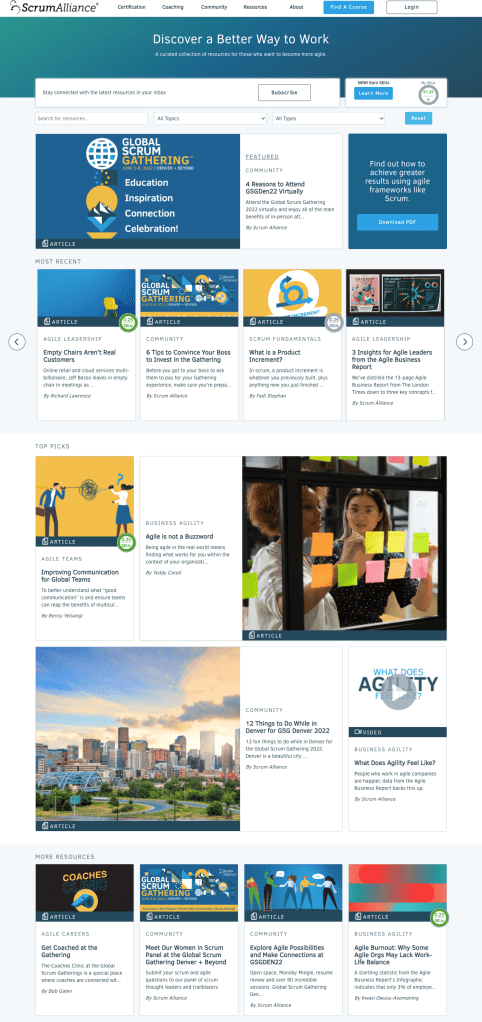
Introducing the Scrum Alliance Resource Library

Content is at the heart of all successful B2B marketing strategies and yet, many organizations make the mistake of hosting their valuable content on a subdomain, or worse, don’t indexing it on the website at all. The average B2B customer requires 12 pieces of content before they are ready to purchase, so ensuring your prospects can find the information they need is paramount to a successful demand generation strategy.

The Scrum Alliance Resource Library project ensured all content is was searchable and highly visible on the website. We also implemented a streamlined content strategy to fuel growth.

Resources.scrumalliance.org

Improved Content Strategy

Our Certified Coaches and Trainers are our subject matter experts in the agile community. In order to ensure the accuracy and credibility of our resource library content, it was imperative that the content be written by these guides.

Using customer interviews, community and member-submitted questions, and SEO-related keyword research (with the help of SEM Rush), I devised a list of content prompt and went to work assigning articles to volunteer coaches and trainers. Alongside a team of content writers and graphic designers, we illustrated the articles, edited them for clarity, and optimized them for SEO.

Results

  • With a new focus on content marketing, I slashed our digital advertising spending by 80% and maintained year-over-year growth rate of 20% for new certifications.
  • We brought in thousands of new subscribers (leads) who are then funneled into our lead nurture program.
  • We recognized a spike in member retention with an increase in certification renewals from 20%-30%.
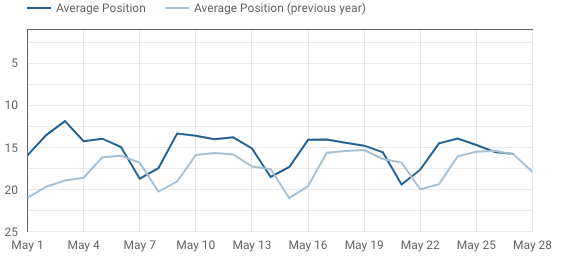
  • We noticed a huge improvement on our website’s SEO. (This can also be attributed to congruent site-wide technical SEO improvements led by myself and another marketer).
SEO improvements from 2021 to 2022
Average position

A Lead Nurture Campaign that fueled a 20% Increase in Certifications

How I Improved Lead-to-Customer Conversion With a Little TLC


After revamping the Scrum Alliance’s content strategy and launching a successful webinar series, we had over 3k leads that we needed to convert into customers. This email automation, lead nurture program in Hubspot served to provide education and keep our services top of mind so that

The Campaign

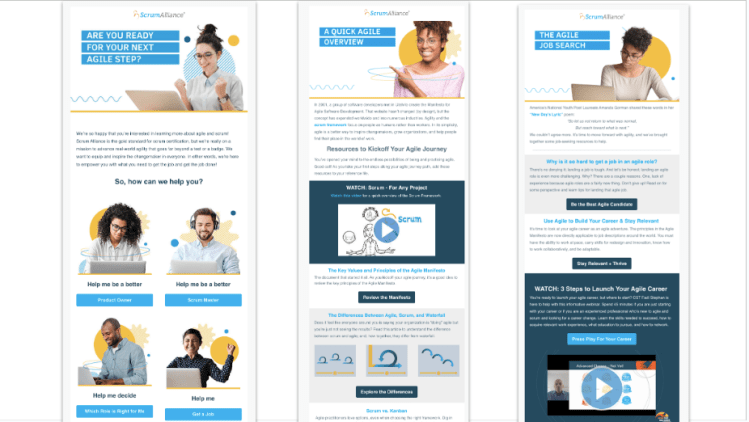
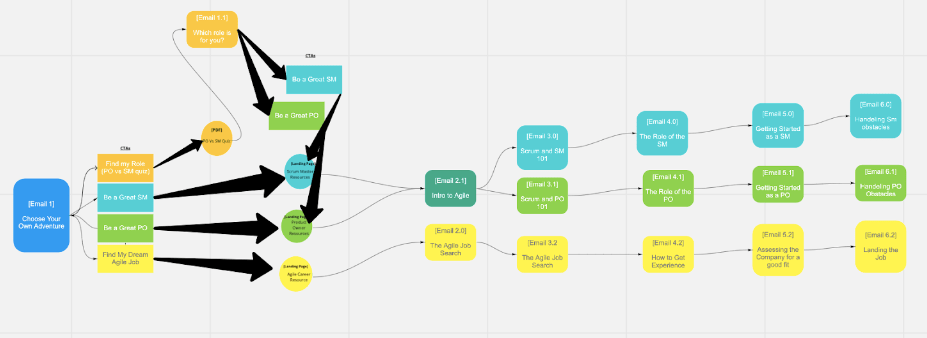
In the first email, leads are able to “choose their own adventure” by selecting their area of interest from the following:

  • Product Owner Resources
  • Scrum Master Resources
  • Career Resources
  • A quiz to help them determine their rotation new agile role.

Email Examples

Email Nurture Journey

Once they select their interest, leads receive eight email touches filled with curated content and authored by Scrum Alliance trainers and coaches.

Results

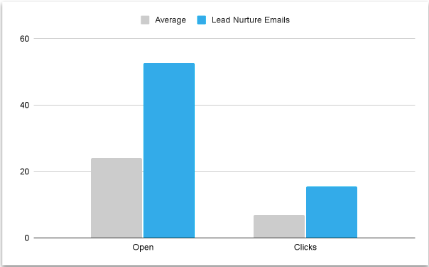
Email performance exceeded expectations for this campaign with incredible open and click rates.

  • A click rate of 15.56% compared to the industry standard of 7.8%. Source 
  • An open rate of 52.8% compared to the industry standard of 20%.

This tells us that the information provided in these emails was not only welcomed but enjoyed by our prospective customers.

Conversions

We also noticed that 11% of people enrolled in our lead nurture campaign go on to obtain a certification resulting in a 20% increase in new certifications year-over-year.

Approaching Agility Webinar Series – Lead Generation

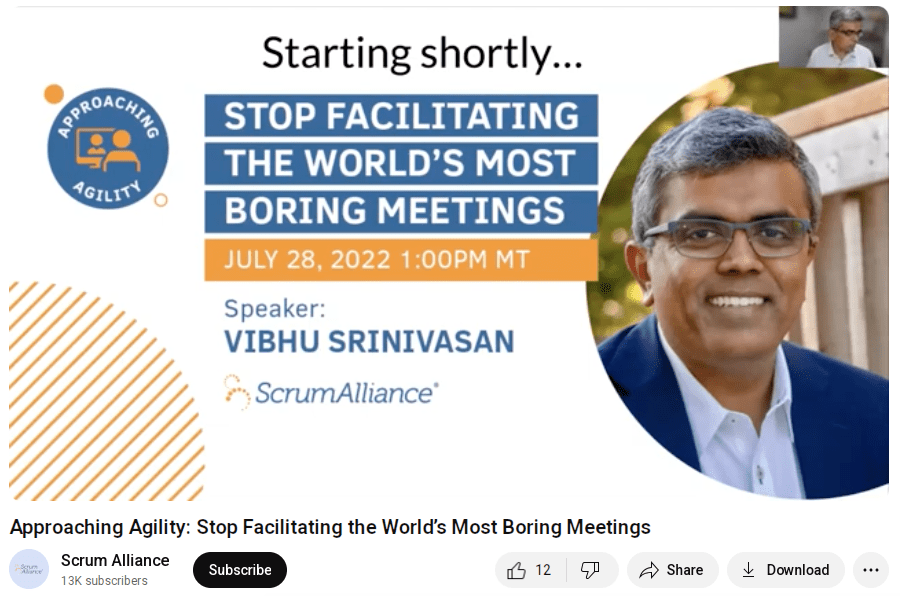
I overhauled the marketing strategy at Scrum Alliance, halting indiscriminate ad spending in favor of an organized lead generation strategy that focuses on providing value and education to potential members. In January of 2022, I launched a webinar series that provides entry-level agile education to potential new certificates.

Results

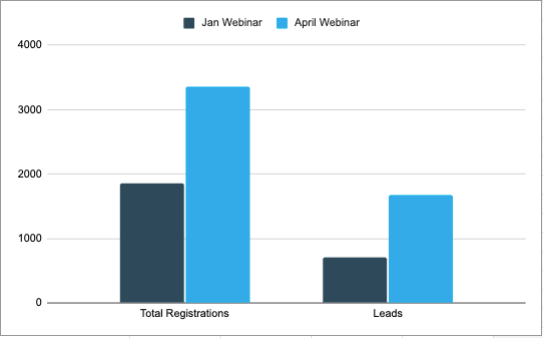
We hosted our second webinar in April of 2022. The first webinar brought in 1,854 registrations and over 709 highly qualified leads. After some ad experimentation, we increased webinar attendance by 81% to 3,360 and lead capture by 136% with a total number of qualified leads at 1,673.

Next steps? I created an eight-touch email nurture campaign to convert these leads into Certified members resulting in a 20% increase in certifications YoY.